Review · RIB & ZODIAC BOAT TOURS
Skjervøy: Whale Watching with RIB Boat and Local Guide
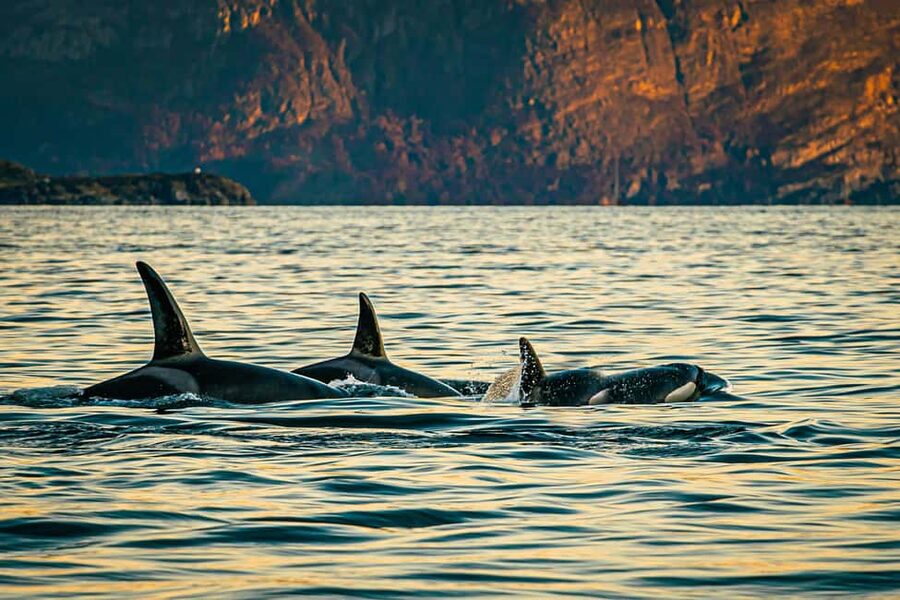
Seeing a pod of orcas work together around feeding herring is the real prize here. From Skjervøy, you ride a fast RIB into northern Norway’s cold coastal waters, where killer whales, humpbacks, and sometimes fin whales may appear against snow-covered mountains. I especially like the small-boat feel and the chance to watch natural behavior rather than a staged wildlife show.
I also like the practical care built into the trip. Warm outerwear, boots, hats, goggles, and life jackets are supplied, while guide Viktor has earned praise for finding whales, explaining their behavior, and keeping a respectful distance. The main drawback is the cold and motion: even with the supplied gear, you need proper gloves and neck protection, and rough water can make the ride lively.
Key points to know before you book
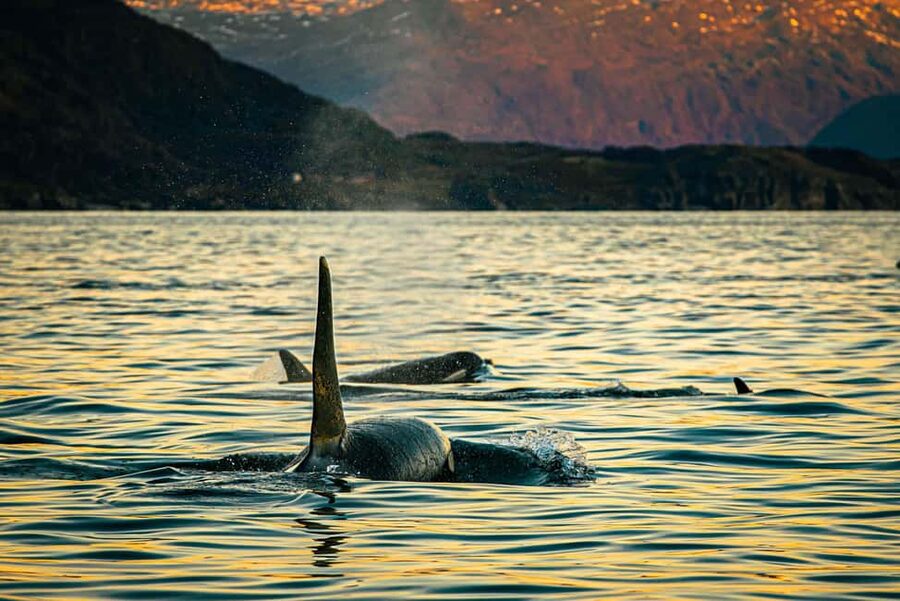
- Orcas are the main attraction: You may see family groups feeding, communicating, and moving together.
- Humpbacks add variety: Their breaches, tail flukes, and songs bring a different kind of drama.
- The trip runs from mid-October to February: Whale sightings depend on the animals and the day’s conditions.
- Viktor is a major part of the experience: He combines boat handling, whale-finding skill, and clear explanations.
- The RIB ride is exciting: Expect spray, wind, cold, and possible waves, not a quiet cruise.
- Skjervøy requires planning from Tromsø: Arctic Route offers daily bus service between the two places.
Why Skjervøy is now a strong whale-watching base
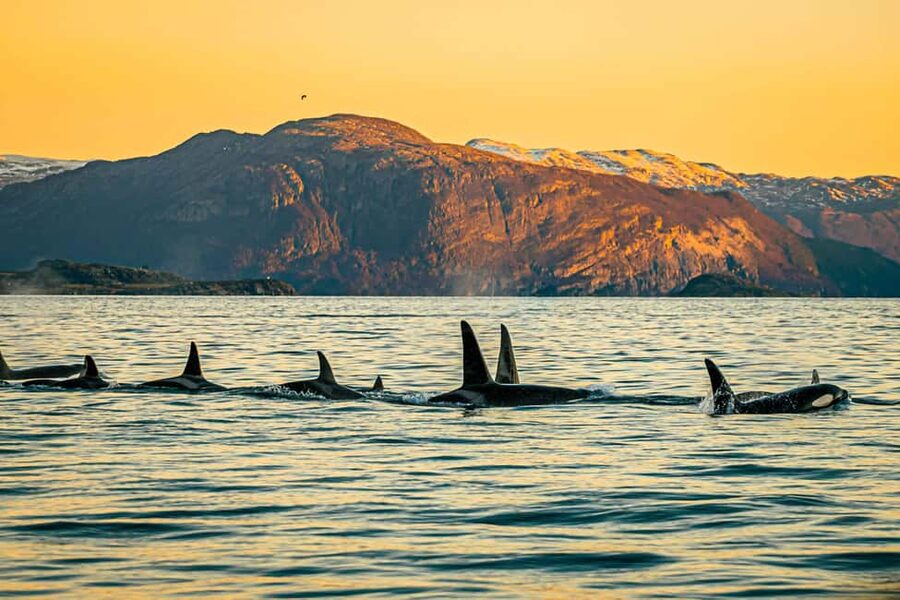
The whale safari leaves from Skjervøy, a coastal settlement in northern Norway, rather than from Tromsø itself. That matters because the herring and the whales have shifted farther north and east in recent years, bringing the action closer to Skjervøy.
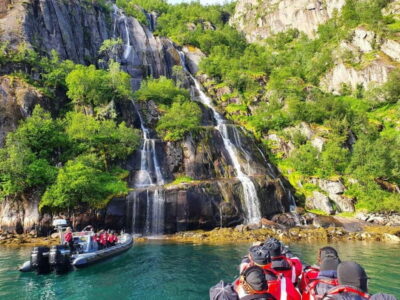
The setting is part of the reward. You are not simply watching a whale in open water. You are out among steep Arctic shores, cold sea, and snow-covered mountains, with very little between you and the weather. On a clear day, the contrast between dark water, white peaks, and black-and-white orcas is striking.
The season runs from the middle of October through February. This is a narrow window, but it matches the period when orcas and humpbacks may gather around herring. Wildlife is never guaranteed, so I would treat the trip as a search in a living environment, not as a fixed show with scheduled appearances.
That said, the recorded experience is very strong, with a 4.9 rating from 109 bookings. The most consistent praise centers on the guide, the quality of the equipment, and the number of whale encounters. Some outings have found large groups of orcas, humpbacks, and even fin whales in the same trip.
More Dolphin and Whale Watching by Speedboat in Norway
- Bleik: Whale Watching by Speedboat with Puffins and Muffins
★ 4.7 · 326 reviews - Whale Watching RIB Safari at Skjervøy
★ 4.8 · 136 reviews - Whale Watching RIB Boat Tour in Skjervoy from Tromso
★ 4.5 · 102 reviews
Meeting at Strandveien 96
The meeting point is on the harbor side of the old white building, below the Extra grocery store. The coordinates are 70.02948760986328, 20.968090057373047.
That description is useful because Skjervøy’s harbor can become busy when several whale operators are preparing boats at once. Head for the back side of the building rather than simply waiting at the front entrance. You should also allow enough time to locate the changing area and get suited up.
The boat returns to the same place after the three-hour outing. The activity itself lasts three hours, but you should allow extra time around it for meeting, changing, and receiving equipment.
Guide Viktor has been singled out repeatedly for a warm welcome and efficient preparation. He helps fit the outerwear and explains what you need before heading to the boat. This simple start matters in Arctic weather. You do not want to be sorting out boots and goggles while everyone else is ready to leave.
From harbor to open water
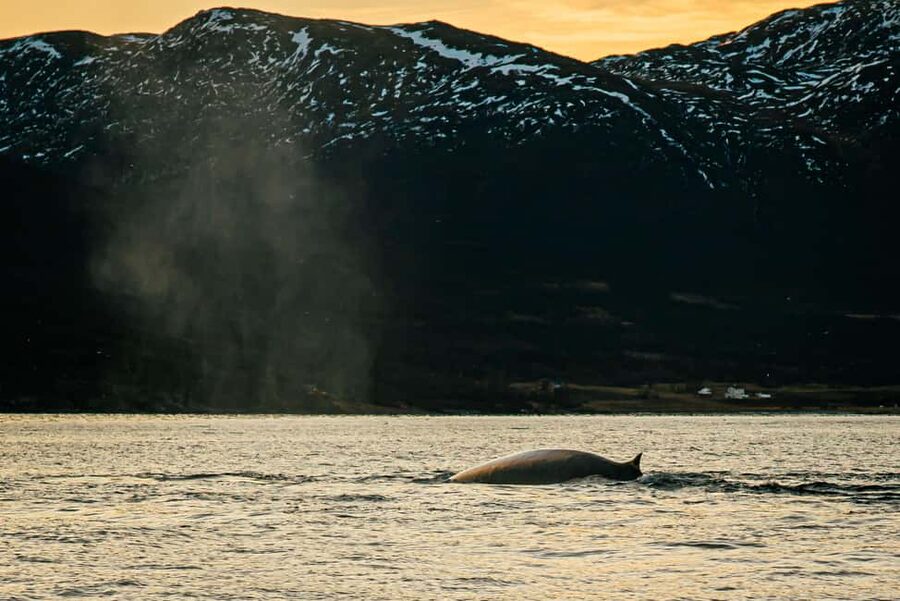
The first part of the ride is about getting away from Skjervøy and into the whale area. A RIB is an inflatable boat with a rigid hull, built for speed and maneuvering. It gets you across the water more quickly than a slow sightseeing boat, but it also exposes you to more motion, spray, and wind.
The boat used for these trips has carried up to 12 people plus Viktor, according to the experience details. That is a fairly compact group for a wildlife outing. You should have a reasonable chance of seeing the water from your seat, but the guide’s ability to share long explanations is limited while the boat is moving and the wind is loud.
I would think of the RIB as part of the adventure, not just transportation. The ride can be rough but fun, especially when there is swell. Some people will love the speed and close contact with the sea. If you prefer a calm, warm cabin and a steady viewing platform, a heated cruiser may suit you better.
Watching orcas work as a team
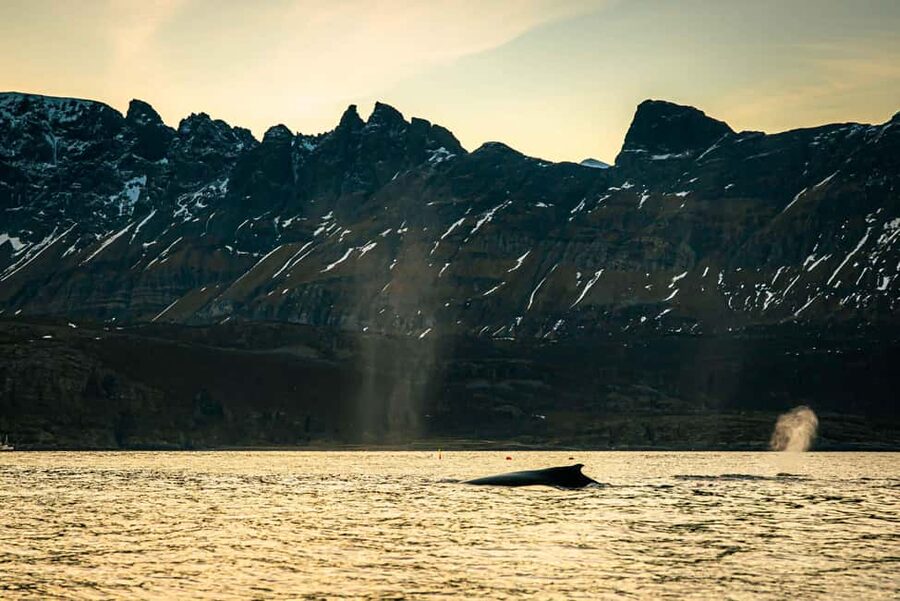
Killer whales are the stars of this excursion. Their black bodies and white patches make them easy to identify, even in choppy water. The most memorable sightings are not always a single fin surfacing nearby. You may see a family group traveling together, circling fish, or coordinating during a feeding event.
The guide explains how orcas use whistles and pulsing sounds to communicate. These sounds can be audible to people in the right conditions, adding another layer to the sighting. Instead of simply pointing at a fin, Viktor connects what you see with the animals’ social behavior.
Several outings have included large groups, with one group estimated at around 50 orcas. Other sightings have involved a family coming close to inspect the boat. That closeness can feel extraordinary, but the best guiding includes restraint. The boat keeps a respectful distance and lets the whales decide how near they want to come.
You may also hear Viktor identify individual orcas by name. That kind of recognition gives the encounter a personal edge, but the important point is that the whales remain wild. You are watching their routine, not directing it.
More RIB and Zodiac Boat Tours in Norway
- From Stavanger: RIB Tour to Lysefjord
★ 4.9 · 1,288 reviews - From Stavanger: Lysefjorden & Pulpit Rock RIB Boat Tour
★ 4.8 · 1,156 reviews - From Svolvær: Lofoten RIB Sea Eagle Safari Trollfjord Cruise
★ 4.9 · 908 reviews - RIB Geiranger – Fjordsafari
★ 4.8 · 807 reviews
Humpbacks, fin whales, and the wider show
Humpback whales behave differently from orcas. They are often alone or found in small groups, and their appearances can be slower and more dramatic. A back rolls through the water, a blow rises into the air, and then a tail fluke may lift clear as the whale descends.
Humpbacks are also known for powerful breaches and distinctive songs. You might not hear a full song from the RIB, but the guide can explain the role of vocalization and the fact that each humpback has an individual tail pattern. When a tail appears, it can help distinguish one whale from another.
Some trips have also seen fin whales. That is not listed as the central promise of the experience, but it adds variety when conditions allow. One particularly strong outing included fin whales, humpbacks, and orcas at the same time.
Do not judge the trip only by how close a whale comes. Wildlife watching involves pauses, searching, and changing conditions. One early-season outing required time and repeated movement before the orcas were found. The reward came later, when a large group appeared.
Viktor’s guiding style and whale etiquette
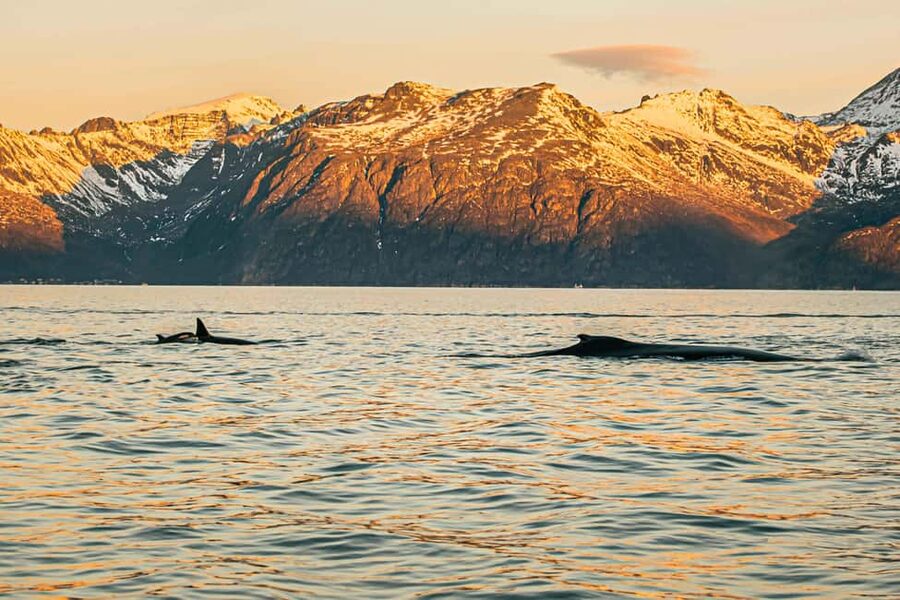
A good skipper makes a major difference on a small boat. Viktor is praised for being calm, friendly, and persistent, with a sharp eye for signs of whale activity. When weather is poor, that skill becomes even more important. One outing took place in difficult conditions, yet the boat found both orcas and humpbacks.
He also appears to balance enthusiasm with care. The boat does not rush right up to the animals or cut across their path simply to create a dramatic photograph. That approach is valuable for two reasons: it reduces disturbance, and it gives you a better chance of watching natural movement.
The boat is not ideal for a long lecture. Engine noise, wind, and the layout limit how much information can be shared while underway. You will get useful commentary, but this is primarily a hands-on wildlife trip rather than a formal marine biology lesson.
I like the way the experience combines local knowledge with practical boat work. Viktor has been praised for asking what else the group hoped to see and for trying to make that possible when conditions allowed. That does not mean every request can be met, but it shows the flexible spirit of a small local operation.
Staying warm on the Arctic Sea
The company supplies warm outerwear, life jackets, hats, thermal boots, and goggles. The goggles are particularly useful because spray can hit your face when the RIB picks up speed. The supplied suit helps protect your main clothing from wind and water.
You should still dress with care. Bring warm gloves that fit beneath or work with the supplied gear, and take neck protection seriously. One cold outing ended with a passenger wishing for better gloves and a clearer warning that a neck covering was essential. Even with a flotation suit, your hands, face, and neck can feel the cold.
I would wear warm layers underneath rather than relying on the outer suit alone. If you bring a camera, protect it in a plastic bag. Spray can reach the boat even when the sea does not look especially rough.
The cold is not a small detail. It shapes how long you can comfortably watch, how easy it is to handle a phone, and how much you enjoy the return ride. Good clothing turns the trip from an endurance test into a pleasure.
Getting to Skjervøy from Tromsø
The whale trip begins in Skjervøy, so you need to arrange your own transport if you are staying in Tromsø. Arctic Route runs daily bus services between Tromsø and Skjervøy, and tickets can be booked separately.
This creates a longer day than a trip leaving directly from Tromsø. Check the bus schedule carefully against the whale departure time, and leave room for delays. The whale activity itself is three hours, but the transfer adds substantial travel time.
The advantage is that you reach the area where the whales are being found, rather than spending the whale-watching period traveling from Tromsø toward Skjervøy. If whale watching is a top priority, staying in Skjervøy may give you a more relaxed start. If you are based in Tromsø, the bus connection makes the trip possible, but you need to plan it as a full-day outing.
What the experience is worth
No price is provided here, so I cannot judge the exact cost against other operators. I can judge what you receive for the booking: a three-hour guided trip, a local skipper, a small RIB, supplied cold-weather equipment, and the chance to see more than one whale species.
That package can be good value if you care most about access and excitement. You are paying for a focused wildlife search in a seasonally important whale area, not for guaranteed animal sightings. The local guide’s ability to find whales and adjust the outing to conditions is a large part of the value.
The small boat also offers a different experience from a heated cabin cruiser. You feel the speed, spray, and movement, and you are closer to the sea. On the other hand, a cruiser may be preferable if you want shelter, easier movement, and more room for extended commentary.
Free cancellation up to 24 hours before departure and the reserve-now, pay-later option make the booking less rigid. Still, the practical risk is the same with any wildlife outing: a flexible cancellation policy does not turn nature into a guarantee.
Who will enjoy this RIB safari
I would choose this trip if you want an active Arctic outing and are excited by the chance to see orcas behaving naturally. It suits people who enjoy fast boats, cold-weather scenery, and the possibility of a rough ride.
Families with older children may find it memorable, especially if everyone can handle the cold and boat motion. The supplied clothing helps, but it does not remove the need for warm personal layers.
This is less suitable if you want a quiet, sheltered viewing experience. The RIB can be wet and lively, and information is harder to hear while the boat is moving. A heated boat is a better match for anyone who values comfort above speed.
The best mindset is patient and realistic. You may see a large group feeding within minutes, or you may spend time searching before the animals appear. Both are part of responsible whale watching.
Should you book the Skjervøy whale safari?
I would book it if orcas are high on your Norway wish list and you are willing to accept the cold and the uncertainty of wildlife. The strongest reasons are the Skjervøy location, the compact RIB, the excellent record of whale sightings, and Viktor’s reputation for finding animals while keeping a respectful distance.
Pack serious gloves, a neck covering, warm layers, and camera protection. Confirm your transport from Tromsø, arrive at the back of the old white harbor building, and allow time to change.
Choose a heated cruiser instead if you want more shelter and a calmer ride. Choose this RIB trip if you want the sea close, the boat moving fast, and the possibility of watching orcas cooperate around their food. For that kind of Arctic experience, it offers a persuasive mix of wildlife, scenery, and local guiding.
FAQ
How long is the whale-watching trip?
The whale-watching activity lasts three hours. It starts and ends at Strandveien 96 in Skjervøy.
Where do I meet the guide?
Meet at the backside of the old white building in the harbor, below the Extra grocery store. The coordinates are 70.02948760986328, 20.968090057373047.
What months does the tour operate?
The seasonal whale-watching period runs from the middle of October through February.
Which whales might I see?
The main target species are killer whales and humpback whales. Fin whales have also been seen during some outings.
Is cold-weather equipment provided?
Yes. The experience provides warm outerwear, life jackets, hats, thermal boots, and goggles. You should still bring suitable gloves and neck protection.
What languages does the guide speak?
The live guide service is available in English and Norwegian.
Can I travel from Tromsø to Skjervøy?
Yes. Arctic Route runs daily bus services between Tromsø and Skjervøy. The bus ticket is booked separately from the whale-watching activity.
Can I cancel the booking?
You can cancel up to 24 hours in advance for a full refund. The reserve-now, pay-later option lets you hold a place without paying immediately.
Just added around Norway
- Hardangerfjord Ultimate RIB adventure from Ulvik★ 5.0 · 27 reviews
- Ulvik scenic RIB adventure to Osafjord a Hardangerfjord branch★ 5.0 · 10 reviews
- Lofoten RIB Sea Eagle Safari and Trollfjord Cruise★ 5.0 · 69 reviews
- Stavanger: Guided Lysefjord Safari on Speedboat★ 5.0 · 22 reviews
- Rib adventure in the Lysefjord with boat house visit★ 5.0 · 31 reviews
- RIB Speed Sightseeing in Kristiansand★ 5.0 · 72 reviews
- Private Cruise: Mostraumen by Zodiac or Lux Pontoon Boat★ 5.0 · 163 reviews
- Scenic Hardangerfjord & Fyksesund RIB adventure from Norheimsund★ 5.0 · 41 reviews
RIB & Zodiac Boat Tours, compared.
Tadoussac/Charlevoix: Whale Watching Zodiac Tour
Read our review →
Exhilarating Rib experience – Dingle sea safari
Read our review →
From Svolvær: Lofoten RIB Sea Eagle Safari Trollfjord Cruise
Read our review →
Granite Falls Zodiac Tour by Vancouver Water Adventures
Read our review →